Free Tool — Team Recovery Plan
Coach's Team Recovery Plan Template
Fill in six fields and get a one-page plan for the practice week, tournament day, travel, hot weather and injury reporting. Print it, copy it as text or print a blank one.
- Free
- No Sign-Up
- Printable
Updated October 24, 2026 · Free to use · Bookmark it
Fill In the Team Details
Pick the options, press Build My Plan and read the one-page plan below. Print it, copy it as text or print a blank template to fill in by hand.
General information, not medical advice. An athletic trainer, a team physician or a pediatrician has the final say. Return to play after any injury or concussion is the decision of a licensed health care professional.
What the Plan Contains
- Practice-week structure. A seven-day layout of hard, light, game and rest days, with the rest-day rule from the American Academy of Pediatrics.
- Tournament-day checklist. Water, shade, cooling, meal and snack timing, warm-up and cool-down blocks, sleep and the emergency plan.
- Travel recovery. Movement breaks, water and sleep for local and overnight trips.
- Heat and weather plan. Pointers to the GHSA and SCHSL heat policies and the NFHS heat guidance, with no copied numbers.
- Injury and concussion reporting. Blank lines for the athletic trainer, emergency contact and nearest hospital, plus the CDC and NFHS steps.
- Parent note and coach sign-off. A short letter to edit and a signature line.
Every line carries the name of the source behind it. Open Sources for This Section under each part of the plan to see the links.
What Each Section Draws On
The plan states only what a named source states. Where a source gives no rule, the plan says so.
| Section | Main Sources | What Is Taken |
|---|---|---|
| Practice-Week Structure | AAP HealthyChildren; NFHS sport specialization and heat acclimatization statements | One day off a week, not more than 5 to 6 days, gradual increases, slow preseason start, hours in one sport. |
| Tournament-Day Checklist | NFHS hydration statement; AAP sports nutrition page; AOSSM STOP; MUSC Health; AASM | Water access, meal and snack timing, warm-up and cool-down blocks, sleep ranges. |
| Travel Recovery | CDC travel page; AAP hot weather page; NFHS emergency action plan statement | Move the legs on long trips, water bottles, venue emergency plans. |
| Heat and Weather Plan | GHSA By-Law 2.67; SCHSL Heat and Acclimatization Guidelines; NFHS; Casa and Csillan (2009); CDC | Policy names and links only, plus the NFHS steps for serious heat illness. |
| Injury and Concussion Reporting | CDC HEADS UP; NFHS concussion guidelines; GHSA; SCHSL | Remove from play, no same-day return, written clearance, danger signs, what to record. |
Five Checks Before Game Day
- Write in the athletic trainer, emergency contact and nearest hospital yourself. This page never fills them in.
- Look up the heat rule for your association or league. GHSA and SCHSL rules bind member high schools, and youth leagues follow their own.
- Ask the host for the emergency action plan at every away venue.
- Share the parent note after you edit it, and keep a copy of the signed plan.
- Talk with the team athletic trainer or a pediatrician about any athlete with a health condition.
The plan sets out when an athlete leaves play and who clears a return. It does not clear anyone to play. That decision belongs to a licensed health care professional.
What This Template Does Not Do
- It does not write a training program. The hard and light split is a planning aid.
- It does not diagnose, clear anyone to play or replace an emergency action plan.
- It does not list heat numbers, fluid amounts or return-to-play steps. The linked policies hold those.
- It does not offer or suggest massage, cupping, scraping or any hands-on care for children.
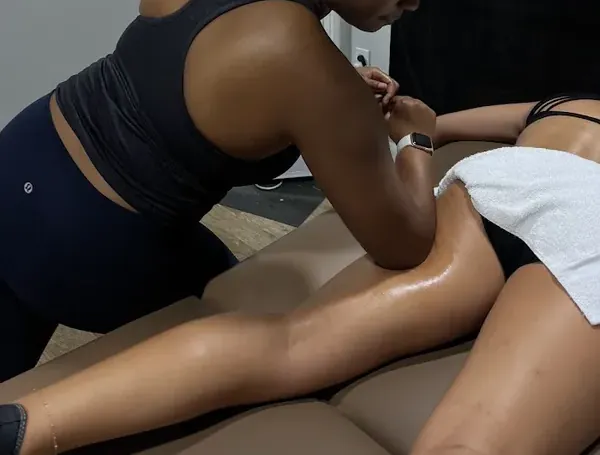
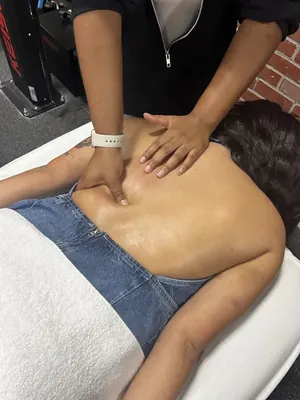
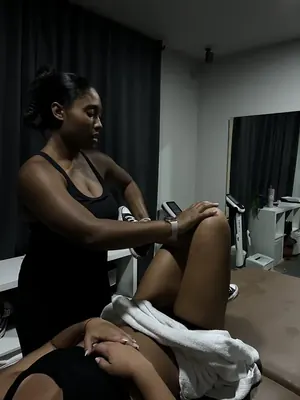
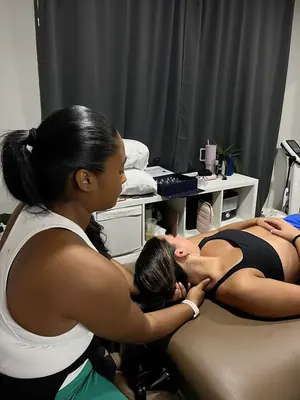
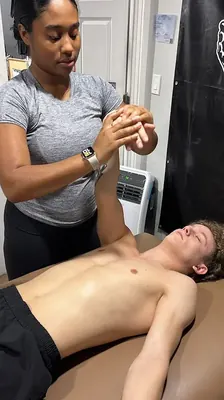
The photos on this page show adult sessions at the studio. Athletic Bodies Revamped, in Richmond Hill, GA, publishes this page, and Maya Sharpe, LMT, coaches cheerleading.
The player-side set is the Cheer and Youth Athlete Recovery Cards. Print the cards for the team and hand out the plan to families.
Printing Tips
Press Print Plan for the plan on screen, or Print Blank Template for a copy to fill in by hand. In the print window, pick Letter paper and turn off headers and footers. The printout carries only a small footer with the studio name, town and website.
Copy Plan as Text puts the plan on the clipboard, with the source names and links, for an email or a team app.
Sources and Methodology
- HealthyChildren.org (AAP): Tips to Prevent Sports Injuries in Children and Teens — plan at least one day off a week, rest periods in practices and games, drink fluids before, during and after activity
- HealthyChildren.org (AAP): Preventing Overuse Injuries in Young Athletes, AAP Policy Explained — not required to train or play more than 5 to 6 days a week; raise weekly training by no more than 10% to 20% at a time; one team per season; extra precautions at multigame tournaments
- NFHS Sports Medicine Advisory Committee: Sport Specialization Position Statement (2026) — hours per week in one sport not beyond the athlete's age, no more than eight months a year, no simultaneous teams
- NFHS Sports Medicine Advisory Committee: Heat Acclimatization and Heat Illness Prevention Position Statement (October 2025) — seven fundamentals: start slowly, adjust for heat, hydrate, recognize early signs, rapid cooling, emergency action plan
- NFHS Sports Medicine Advisory Committee: Position Statement and Recommendations for Maintaining Hydration (October 2025) — drink before, during and after; on-site WBGT as the gold standard; follow state or regional guidelines
- NFHS Sports Medicine Advisory Committee: Suggested Guidelines for Management of Concussion in Sports (October 2023) — remove from sport, evaluation, tell parents, written clearance before return
- NFHS Sports Medicine Advisory Committee: Emergency Action Plan (EAP) for Interscholastic Activities Position Statement (October 2024) — written, venue-specific plans; locate emergency equipment such as the AED and cooling tub
- Georgia High School Association: By-Law 2.67, Practice Policy for Heat and Humidity (PDF, July 2023) — policy name and structure only: WBGT readings, rest breaks in a cool zone, football acclimatization; no numbers are copied
- Georgia High School Association: Concussion Management in High School Athletics — removal from play, no same-day return, clearance by a health care professional
- South Carolina High School League: Heat and Acclimatization Guidelines (April 2024) — policy name and structure only: on-site WBGT, cooling devices, venue-specific emergency action plan; no numbers are copied
- South Carolina High School League: Health and Safety — emergency action plans and the Concussion Management Plan section
- Casa and Csillan: Preseason Heat-Acclimatization Guidelines for Secondary School Athletics (Journal of Athletic Training, 2009) — the inter-association task force guideline written with NATA; named as a pointer, no numbers are copied
- CDC: Heat and Athletes — stop and move to a cool place when faint or weak; HeatRisk Dashboard by zip code
- CDC HEADS UP: A Fact Sheet for Youth Sports Coaches — remove from play, only a health care provider decides return, danger signs, what to record, bring emergency contacts to each game and practice
- CDC: Understanding Your Risk for Blood Clots with Travel — move the legs often on long trips, calf exercises, flex the ankles
- HealthyChildren.org (AAP): How to Keep Young Athletes and Active Kids Safe in Hot Weather — chilled or frozen water bottles with backups; ask your pediatrician for a plan when a child has a health condition
- HealthyChildren.org (AAP): Sports Nutrition for Busy Families and Busy Lifestyles (2017) — meal timing 3 to 4 hours before, small frequent snacks between games, extra food on tournament days, refuel after exercise
- American Academy of Sleep Medicine: Recommended Amount of Sleep for Pediatric Populations (Journal of Clinical Sleep Medicine, 2016) — 9 to 12 hours for ages 6 to 12 and 8 to 10 hours for ages 13 to 18 per 24 hours; endorsed by the American Academy of Pediatrics
- MUSC Health: Proper Warm-Up and Cool-Down Routine (June 2022) — about 5 minutes of easy movement to cool down, static stretches held 20 to 30 seconds
- AOSSM STOP Sports Injuries: Prevention and Care of Soccer Injuries (tip sheet, reviewed September 2025) — warm up at least 10 minutes with jogging, dynamic moves and stretching; return to play only when a health care professional gives clearance
- AOSSM STOP Sports Injuries: Baseball Injuries (tip sheet, reviewed November 2025) — follow current pitch-count guidance, never throw with pain, warm up at least 10 minutes
- AOSSM STOP Sports Injuries: Softball Injury Prevention (tip sheet) — age-appropriate pitch count limits and rest days, do not pitch with pain
Questions About This Tool
Does This Plan Replace My State Association Rules?
No. The Georgia High School Association and the South Carolina High School League set heat and concussion rules for member high schools. A youth or rec league sets its own. This plan links the policies by name and leaves their numbers out.
Why Does the Plan Show No Heat Numbers?
Heat tables belong to the association or league. A copied number goes out of date when the policy changes, so the plan names the policy and links to it.
What Do Hard, Light and Rest Mean?
They are a planning aid. Hard is a full-workload practice, light is a shorter or easier one and rest is a day with no practice or game. The sources set the rest-day rule and the 5 to 6 day ceiling. The coach sets the rest of the split.
Is My Team Information Saved?
Only when you tick Remember My Entries. Then the team name, sport, age group, phase, counts and travel stay in this browser. The athletic trainer, emergency contact and hospital lines are never saved. Press Clear Saved Entries to remove them.
Who Decides When an Injured Athlete Returns to Play?
A licensed health care professional decides after an injury or a concussion. CDC HEADS UP, the NFHS, the GHSA and the SCHSL all say to keep an athlete with a suspected concussion out of play until a health care professional clears the return.
Is This Plan Medical Advice?
No. It is general information built from the sources listed on this page. An athletic trainer, a team physician or a pediatrician has the final say.