
Free Tool — Desk Break Timer
Two-Minute Neck and Shoulder Reset
A guided timer with six gentle movements, 20 seconds each, for people who sit all day. No sign-up, no notifications, and an optional reminder while this tab stays open.
- Free
- No Sign-Up
Updated October 24, 2026 · Free to use · Bookmark it
Start Your Two-Minute Reset
Six gentle moves, 20 seconds each, 2 minutes in total. Four moves switch sides or direction at the 10-second mark, so the full routine stays at two minutes.
Move 1 of 6
Chin Tuck
Sit tall. Draw your chin straight back, eyes level. Hold a few seconds, release, repeat.
0:00 of 2:00
0 Resets This Session
0 days Day Streak
0 Resets Saved on This Device
The streak stays in this browser only.
The Six Moves and Where They Come From
Each move comes from a named health source, listed below. Every move runs 20 seconds. The tilt, shoulder rolls, doorway stretch and wrist stretch change sides or direction at the 10-second mark.
- Chin Tuck. Sit tall and draw the chin straight back without changing eye level. Source: Cleveland Clinic.
- Ear-to-Shoulder Tilt. Hold the chair with one hand and lower the opposite ear toward the shoulder without pushing past comfortable. Sources: Cleveland Clinic and NIH. NIH lists a 15-second hold on each side. This timer uses 10 seconds a side to keep the routine near two minutes.
- Shoulder Rolls. Roll the shoulders forward, then backward, in circles. Source: Harvard Health.
- Doorway Chest Opener. Elbows bent 90 degrees, palms on the doorframe, one foot stepped back, lean in. Source: Cleveland Clinic. No doorway nearby? Press Skip.
- Upper-Back Reach. Hands across the chest, eyes forward, lean back over the chair back for 3 seconds, return, repeat. Source: NHS OPAL. The source also looks up toward the ceiling. This timer leaves that part out to keep the move gentle.
- Wrist and Forearm Stretch. One arm straight out, the other hand pulls the hand back, then down. Source: NIH. NIH lists a 20-second hold. This timer uses 10 seconds per arm.
Set Up Your Desk
OSHA says no single posture fits everyone. Its computer workstation guidance lists these setup points.
- Screen distance. Put the monitor directly in front of you, at least 20 inches away. OSHA lists 20 to 40 inches as the preferred viewing distance.
- Screen height. The top line of the screen sits at or below eye level.
- Elbows and wrists. Elbows stay close to the body, bent between 90 and 120 degrees. Wrists and forearms stay straight, shoulders relaxed.
- Feet. Feet rest fully on the floor, or on a footrest if the seat height does not change.
OSHA adds that sitting still for long periods is not healthy even with a good posture. Its advice: change position often, stretch, and stand up and walk around for a few minutes from time to time.
Stand Up and Move Every 30 to 60 Minutes
Harvard Health suggests setting a timer for every 30 to 60 minutes of long sitting. When it rings, get up and walk around or do some simple exercise for a few minutes. The Remind Me Every menu above offers 30, 45 and 60 minutes, inside that range.
OSHA explains why short breaks matter: holding one posture, such as looking at a monitor, tires the neck and shoulder muscles that support the head. It lists short rest breaks to stand, stretch and move around.
When to Stop or Skip
- Stop if pain sharpens, or if numbness, tingling or dizziness appears.
- Skip any move that hurts. Harvard Health describes these stretches as gentle, with no pain.
- See a doctor for persistent or severe pain, numbness, tingling or weakness in the neck, shoulders or arms. Harvard Health lists these as reasons to consult one.
- Skip the routine if a clinician told you to avoid neck movement.
Where Hands-On Help Fits
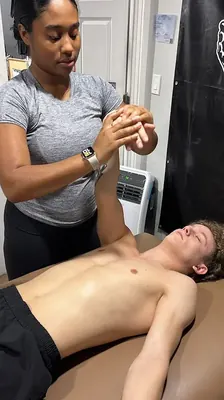
A two-minute break is a movement habit, not a treatment. Neck and shoulder tension that keeps coming back is a good question for a doctor or other licensed health professional.
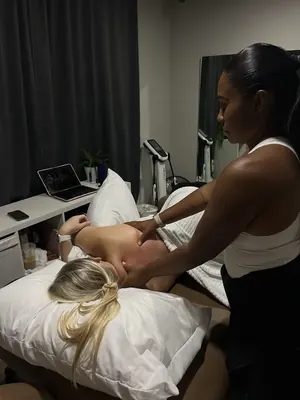
Deep tissue massage applies firm, focused pressure into deeper muscle layers and myofascial structures. It targets chronic tension, knots and restricted range of motion. Maya Sharpe, LMT, books a single body part session for 30 minutes at $70. See deep tissue details.
Not sure whether a massage fits today? Run the pre-massage checklist. Pain that is sudden or severe needs a medical check first: read the Soreness or Red Flag guide.
Sources and Methodology
- Cleveland Clinic: 8 Posture Exercises To Sit and Stand Straighter — Chin retraction while sitting, the doorway chest stretch and the seated neck stretch with a hand on the chair.
- NIH Office of Research Services: Ergonomics Exercises and Stretches — Neck side bend (ear toward shoulder), the wrist stretch, and the note that these exercises are for healthy adults and are not meant to cause pain or discomfort.
- Harvard Health Publishing: Practical Tips and Simple Exercises To Prevent Neck Pain — Shoulder rolls (forward, then backward), gentle stretching without pain, and when to see a doctor.
- NHS OPAL Return to Work: Seated Thoracic Extension — Hands across the chest, lean back over the chair back for 3 seconds, repeat 5 times.
- OSHA: Computer Workstations eTool, Good Working Positions — Elbows bent between 90 and 120 degrees, feet supported, head level, and changing position often.
- OSHA: Computer Workstations eTool, Monitors — Monitor directly in front and at least 20 inches away; top line of the screen at or below eye level.
- OSHA: Computer Workstations eTool, Work Process and Recognition — Static postures tire the neck and shoulder muscles; short rest breaks to stand, stretch and move around.
- Harvard Health Publishing: Stand Up for Your Heart — Set a timer for every 30 to 60 minutes of sitting, then get up and walk around or do simple exercise for a few minutes.
Questions About This Tool
Does the Reminder Need Notification Permission?
No. The reminder works only while this tab stays open. It asks for no notification permission and runs nothing in the background.
Why Does the Tilt Switch Sides After 10 Seconds?
Each of the six moves runs 20 seconds, so the routine totals two minutes. Moves with two sides split the time. NIH lists longer holds on each side, so repeat the routine for more.
Is My Streak Saved Online?
No. It stays in this browser on this device. The Clear Streak button removes it.
Who Skips This Routine?
Anyone told by a clinician to avoid neck movement. Stop if pain sharpens or numbness, tingling or dizziness appears.
Does the Screen Stay Awake?
Only if you tick the option and your browser offers a screen wake lock. The lock lets go when you pause or finish.
Want Hands-On Help With Deep Tissue Massage?
Maya Sharpe, LMT, 220 Thunderbird Dr, Richmond Hill, GA. Monday to Friday 9 AM to 8 PM, Saturday 9 AM to 1 PM, Eastern Time.