Call or text (408) 561-8431 Book Your Session

Free Tool — Soreness or Red Flag

Soreness or Red Flag? Know When to See a Doctor

Tick your symptoms and see one of three tiers in words and color: emergency, doctor soon, or usually ordinary soreness. Built from CDC, MedlinePlus, NHS and Cleveland Clinic wording. It is never a diagnosis.

  • Free
  • No Sign-Up
  • Printable

Start Here

Updated October 24, 2026 · Free to use · Bookmark it

Maya Sharpe working on a client's hip and leg on the treatment table

Symptom Sorter

Tick every item that applies to you right now. Then press Sort My Symptoms. The most serious tier you tick sets the result.

This sorter is not a diagnosis. Call 911 for chest pain, trouble breathing, fainting, a sudden severe headache or signs of a stroke.

Heart, Breathing, Head and Whole Body
Muscles, Bones and Joints
How Long and How Often
None of the Above
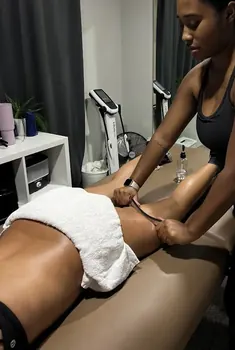
Maya Sharpe using a scraping tool on a client's calf
A swollen, warm, red or painful calf on one side is a doctor-soon item.

How to Read Your Result

Three tiers. Each has a color and a name, so color is never the only signal. Every item comes from a named source listed at the end of this page.

Emergency

Call 911 or Go to the Emergency Room

  • Chest pain, pressure or discomfort, or pain in the jaw, neck, back, arm or shoulder
  • Trouble breathing or shortness of breath
  • Fainting, or feeling like you will faint
  • A sudden severe headache with no known cause
  • After a hit to the head: confusion, a headache that gets worse, repeated vomiting, unusual drowsiness or trouble waking
  • Signs of a stroke: sudden numbness or weakness in the face, arm or leg (especially on one side), sudden confusion or trouble speaking, sudden trouble seeing, or sudden trouble walking or loss of balance
  • Signs of heat stroke: confusion, slurred speech, a seizure or passing out, with hot skin or a very high body temperature
  • Coughing up more than a few teaspoons of blood, or coughing up blood with chest pain, dizziness, fever or severe shortness of breath
  • Muscle aches with a very stiff neck or a high fever
  • After an injury: you heard a crack, or the body part changed shape or points at an odd angle
  • After an injury: the arm or leg is numb, tingling, blue or grey, or cold to the touch
  • New muscle weakness, or you cannot move part of your body
Doctor Soon

See a Doctor Soon (Within a Day or Two)

  • Dark, tea-colored or cola-colored urine, especially after hard exercise with severe muscle pain or weakness
  • One calf or leg that is swollen, warm, red or painful
  • Pain after a pop or snap at the moment you were hurt, with swelling or trouble walking
  • A swollen joint, or a joint that locks, gives way or clicks painfully
  • You cannot put weight on the leg or walk more than a few steps
  • Numbness or tingling that keeps coming back or does not go away
  • Swelling or redness around a sore muscle
  • Severe pain that came on suddenly or is getting worse quickly
  • Pain that feels sharp and constant
  • Fever, chills or feeling generally unwell along with muscle pain
  • Coughing up any amount of blood
  • Pain that wakes you at night, or is present at rest and is getting worse
  • Soreness that has not improved after a week, or is getting worse
  • Soreness after most workouts, or you cannot use part of your body

Dark urine after hard exercise with severe muscle pain or weakness sits here for the usual timing, but CDC and Cleveland Clinic both say to get care right away. The result states that.

Ordinary

Usually Ordinary Soreness: Rest, Move Gently, Recheck

None of the items above applies, and the soreness is easing or steady. Rest, move gently, and recheck in a day or two. See a doctor if soreness has not improved after a week or is getting worse.

What Ordinary Soreness Looks Like

Delayed onset muscle soreness, or DOMS, is the ache that arrives after unfamiliar or hard exercise. Cleveland Clinic says it usually follows a new activity, a new kind of training or a workout harder than you are used to.

The Timeline

Timeline of ordinary muscle soreness over seven days Day 0 is the hard workout. Soreness sets in on days 1 to 3. It usually lasts a few days and rarely lasts more than 5 days. At 7 days or more, see a doctor. 0123 4567 Days after hard exercise Workout Sets in Usually a few days 7+ days: see a doctor
Figures from Cleveland Clinic. Individual timing differs.
  1. Day 0. Intense or unfamiliar exercise.
  2. Days 1 to 3. Pain sets in. It builds over several hours and appears one to three days after intense exercise.
  3. A few days. It usually lasts a few days after the exercise that started it and rarely lasts more than five.
  4. A week or more. Cleveland Clinic says this points to a possible injury, such as a muscle strain. See a provider.

MedlinePlus sets a lower line for muscle pain in general: contact a provider if muscle pain lasts more than 3 days. Ask sooner when you are unsure.

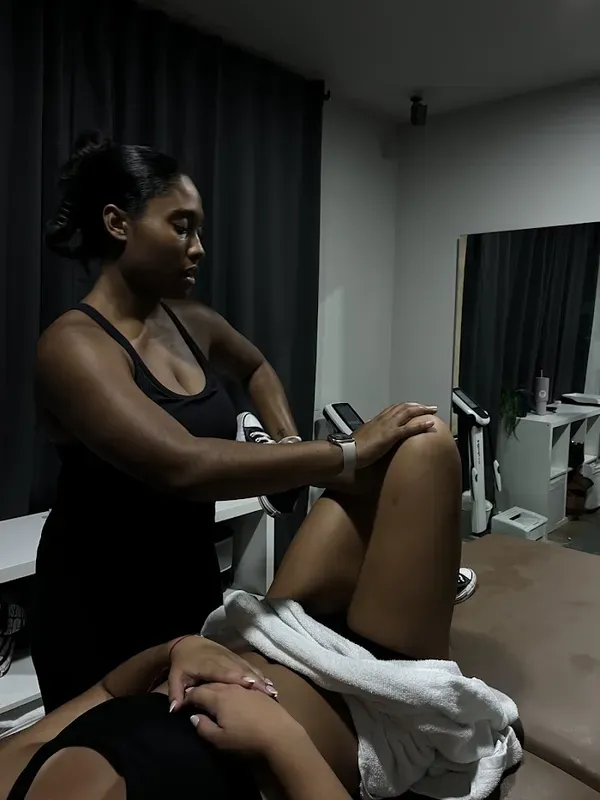
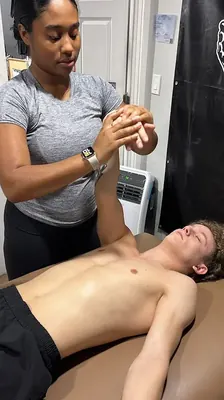
Maya Sharpe stretching a client's arm during a table session
Gentle movement is on the list of what helps ordinary soreness.

How It Feels

  • Soreness in the muscles you worked. Cleveland Clinic calls it the most common symptom.
  • Muscles that feel tender to touch.
  • Stiffness or a smaller range of motion.
  • Eccentric moves are more likely to cause it: lowering a weight, running downhill, lunges and landing from jumps.

What Usually Helps

  • Rest. Cleveland Clinic calls rest usually the best treatment.
  • Everyday movement, a short walk and light stretching.
  • Heat for stiffness or cold for pain, as Cleveland Clinic describes.
  • Drinking enough water (Cleveland Clinic) and getting enough sleep (MedlinePlus).
  • Skipping intense exercise on the sore muscles until the soreness eases.

After a sprain or strain, the NHS says to avoid heat, alcohol and massage for the first couple of days. That is different from ordinary DOMS, so use the sorter first if you think you were hurt.

Rhabdomyolysis: The Rare Case to Know

Rhabdomyolysis, often called rhabdo, is the breakdown of muscle tissue. It releases muscle fiber contents into the blood, and those contents are harmful to the kidneys (MedlinePlus). Severe exertion is one listed cause. Cleveland Clinic says the risk rises when you push yourself too hard without resting.

CDC lists the signs: muscle cramps, aches or pains worse than expected; dark urine the color of tea or cola; and feeling weak or tired, including being unable to finish a task you finished before. MedlinePlus adds less urine than usual. CDC says symptoms do not always begin at once: they start hours or days after the muscle injury.

Seek medical treatment right away if these signs appear. CDC says earlier diagnosis means an earlier start to treatment and a greater chance of recovery without permanent health effects. Cleveland Clinic warns of a life-threatening risk if rhabdomyolysis is not treated quickly.

Only a doctor tests for it. This page does not say whether you have it. If dark urine and severe muscle pain or weakness fit your day, tick the dark urine item in the sorter and call.

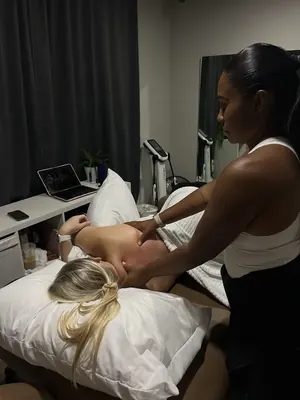
Maya Sharpe working on a client's shoulder and upper back in her studio
Muscle pain that is worse than expected is a sign to ask a professional, not to push through.

Questions to Ask Your Doctor or Athletic Trainer

Print this box and bring it to the visit. Fill in the notes first. A clear story saves time.

Questions to Ask Your Doctor or Athletic Trainer

My Notes

  • When it started: ______________________________
  • What I was doing: ______________________________
  • Where it hurts: ______________________________
  • Color of my urine today: ______________________
  • Medicines I take: ______________________________
  • Other symptoms: ______________________________

Questions

  1. What do you think is causing this?
  2. Do I need any tests, such as blood, urine or imaging?
  3. Which signs mean I come back or go to the emergency room?
  4. When is it okay to return to training, and how do I build back up?
  5. Which movements do I skip for now?
  6. Is massage okay while I recover?
  7. When do we recheck, and who do I call with questions?
Maya Sharpe working oil into a client's hip and leg
Bring the notes to your appointment. A therapist in Georgia does not diagnose.
Where Each Sorter Item Comes From
  • Chest pain, pressure or discomfort, or pain in the jaw, neck, back, arm or shoulder. CDC Heart Attack Symptoms
  • Trouble breathing or shortness of breath. CDC Heart Attack Symptoms; MedlinePlus Deep Vein Thrombosis; MedlinePlus Muscle Aches
  • Fainting, or feeling like you will faint. CDC Heart Attack Symptoms; MedlinePlus Deep Vein Thrombosis
  • A sudden severe headache with no known cause. CDC Signs and Symptoms of Stroke
  • After a hit to the head: confusion, a headache that gets worse, repeated vomiting, unusual drowsiness or trouble waking. CDC HEADS UP Concussion Signs and Symptoms
  • Signs of a stroke: sudden numbness or weakness in the face, arm or leg (especially on one side), sudden confusion or trouble speaking, sudden trouble seeing, or sudden trouble walking or loss of balance. CDC Signs and Symptoms of Stroke
  • Signs of heat stroke: confusion, slurred speech, a seizure or passing out, with hot skin or a very high body temperature. CDC NIOSH Heat-Related Illnesses; NHS Heat Exhaustion and Heatstroke
  • Coughing up more than a few teaspoons of blood, or coughing up blood with chest pain, dizziness, fever or severe shortness of breath. MedlinePlus Coughing Up Blood
  • Muscle aches with a very stiff neck or a high fever. MedlinePlus Muscle Aches (call 911 list)
  • After an injury: you heard a crack, or the body part changed shape or points at an odd angle. NHS Sprains and Strains (999 or A&E list)
  • After an injury: the arm or leg is numb, tingling, blue or grey, or cold to the touch. NHS Sprains and Strains (999 or A&E list)
  • New muscle weakness, or you cannot move part of your body. MedlinePlus Muscle Aches (call 911 list)
  • Dark, tea-colored or cola-colored urine, especially after hard exercise with severe muscle pain or weakness. CDC NIOSH Rhabdomyolysis signs; MedlinePlus Rhabdomyolysis; Cleveland Clinic Rhabdomyolysis; Cleveland Clinic DOMS
  • One calf or leg that is swollen, warm, red or painful. CDC Blood Clots; MedlinePlus Deep Vein Thrombosis; NHS Deep Vein Thrombosis
  • Pain after a pop or snap at the moment you were hurt, with swelling or trouble walking. AAOS OrthoInfo Achilles Tendon Rupture (popping noise; a doctor's exam is needed)
  • A swollen joint, or a joint that locks, gives way or clicks painfully. NHS Knee Pain (get urgent advice)
  • You cannot put weight on the leg or walk more than a few steps. NHS Sprains and Strains; NHS Knee Pain (get urgent advice)
  • Numbness or tingling that keeps coming back or does not go away. Cleveland Clinic Paresthesia (talk to a provider about frequent tingling)
  • Swelling or redness around a sore muscle. MedlinePlus Muscle Aches (sign of infection); Cleveland Clinic DOMS (severe swelling)
  • Severe pain that came on suddenly or is getting worse quickly. NHS Back Pain (urgent advice); MedlinePlus Muscle Aches (severe unexplained pain)
  • Pain that feels sharp and constant. Cleveland Clinic DOMS
  • Fever, chills or feeling generally unwell along with muscle pain. NHS Back Pain (hot, cold, shivery or unwell); MedlinePlus Muscle Aches (sign of infection)
  • Coughing up any amount of blood. MedlinePlus Coughing Up Blood
  • Pain that wakes you at night, or is present at rest and is getting worse. NHS Back Pain (worse at night or does not improve with rest; worsening)
  • Soreness that has not improved after a week, or is getting worse. Cleveland Clinic DOMS (more than a week); MedlinePlus Muscle Aches (more than 3 days)
  • Soreness after most workouts, or you cannot use part of your body. Cleveland Clinic DOMS

The sorter follows each source's own level of urgency. The NHS pages use British phone numbers and hospital names, so the sorter translates them to 911 and the emergency room.

Open the massage readiness checklist before you book a session.

How We Built This

Sources and Methodology

Last updated October 24, 2026.

Educational Information Only. This tool gives general information for healthy adults and does not diagnose, treat or replace advice from a doctor, physical therapist or other licensed health professional. Stop and get medical care for chest pain, fainting, trouble breathing, sudden severe pain, numbness or weakness, or any symptom that worries you. A massage therapist does not diagnose medical conditions.

Questions About This Tool

Is This Sorter a Diagnosis?

No. It matches what you tick to warning-sign lists published by medical bodies. A doctor decides what is going on.

Why Is Dark Urine in the Doctor Group When the Sources Say Right Away?

The group is named for the usual timing. For dark urine after hard exercise with severe muscle pain or weakness, CDC and Cleveland Clinic both say to get medical care right away, and the result says so.

How Long Does Ordinary Soreness Last?

Cleveland Clinic says delayed onset muscle soreness sets in one to three days after intense exercise, usually lasts a few days and rarely lasts more than five. A week or more points to a possible injury.

Does the Page Save My Answers?

No. Nothing leaves your device and nothing is stored. Press Clear My Answers or reload and the sorter is empty.

Want Hands-On Help With Sports Massage?

Maya Sharpe, LMT, 220 Thunderbird Dr, Richmond Hill, GA. Monday to Friday 9 AM to 8 PM, Saturday 9 AM to 1 PM, Eastern Time.

See sports massage details